
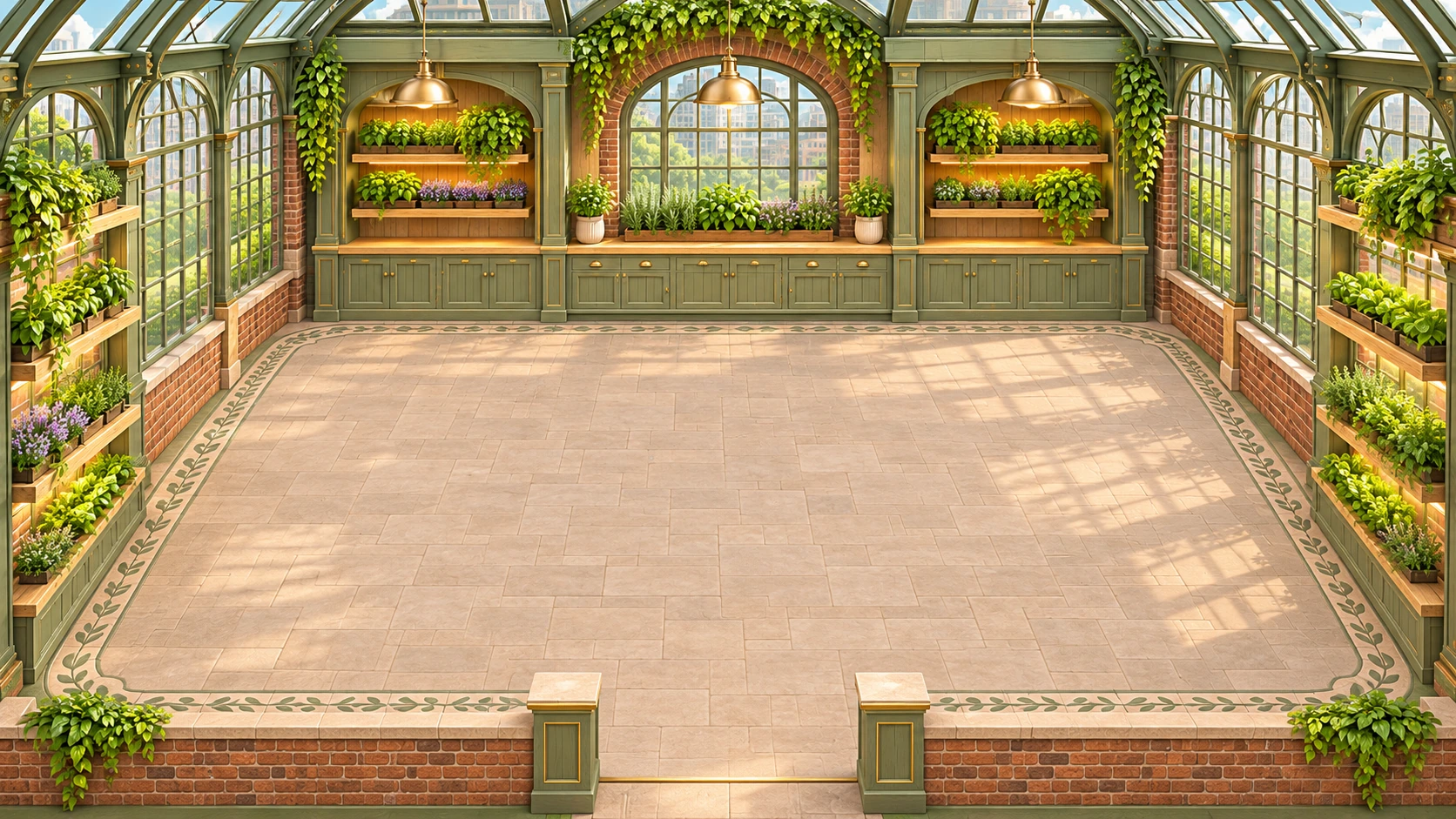
Urban Farm at a glance
These are base values before difficulty, workplace level, growth, reputation, and other modifiers. Costs for additional workstations and hires rise as the company grows.
| Base value | Urban Farm |
|---|---|
| Access | Free for every founder |
| Starting cash | $16,500 |
| Sale value (produce crates) | $520 |
| Materials per unit (Standard) | $146 |
| Production time per unit | 7.0 s |
| Time between buyers | 8.5 s |
| First growing bench | $2,300 |
| First hire | $3,600 |
| Daily salary per employee | $520 |
| Base daily rent | $650 |
| Value per $1 of average daily profit | $198 |
Company value is driven by earning power: the five-day average of daily profit is multiplied by 9 × 22, then adjusted for cash, assets, reputation, customer happiness, and investor confidence. That is why steady profit matters more than one large sale.
How the Urban Farm plays
Crates are worth roughly three times a café order and take a little longer to produce. Buyers arrive at a moderate pace, so the farm neither floods with customers nor waits long between them.
Growing benches wear faster than café equipment. Irrigation failures and greenhouse outages hit production directly, so keeping benches in good condition protects the farm’s output more than any marketing spend.
Urban Farm price levels
Price level changes the sale value and how many customers arrive. The prices below are the base sale value at each level; reputation, workplace level, and customer happiness then adjust the price you see in play.
| Price level | Base price | Margin after materials | Customer demand |
|---|---|---|---|
| Value | $440 | $294 | ×1.30 |
| Standard | $520 | $374 | ×1.00 |
| Premium | $615 | $469 | ×0.78 |
| Luxury | $730 | $584 | ×0.56 |
The farm’s middle-of-the-road numbers make Standard pricing a sensible default. Move to Premium once reputation is high and buyers are rarely leaving unserved.
Strategy for the Urban Farm
- Expand when the existing benches are busy and buyers are waiting, not before.
- Check bench condition before hiring; another employee cannot help if the bench they would use is broken.
- A supplier deal cuts material costs by 40% for three days. It pays best when the farm is fully staffed and production is steady.
- Maintenance specialists slow equipment wear and suit a farm that runs every bench all day.
Incidents in the Urban Farm
Random incidents interrupt production or demand until you respond. Each can be resolved immediately, contained for less, or left running.
- The greenhouse lost power: Pumps, grow lights, and climate controls have stopped.
- Seeds and nutrients are delayed: The next production cycle is at risk without essential supplies.
- A quality complaint went public: Buyers are questioning the quality of the latest harvest.
- The irrigation system failed: Water pressure failures are damaging growing equipment.
The Urban Farm is free to play
The Urban Farm is one of three businesses every founder can start without a purchase. It supports the full journey from a single workstation to franchises and an IPO.